

Good news for future Pokémon Omega Ruby and Alpha Sapphire owners! The Eon Ticket which allows access to Southern Island, and subsequently the chance to catch Latios or Latias, will be able to be shared to other 3DS users via the 3DS’s StreetPass feature. This allows those who are unable to get a code or download will be able to through friends or strangers that did. The code doesn’t expire.
How the Eon Ticket will first be distributed has yet to be announced for English fans, although there will be codes for Japanese gamers in a CoroCoro publication.
<3 PJ
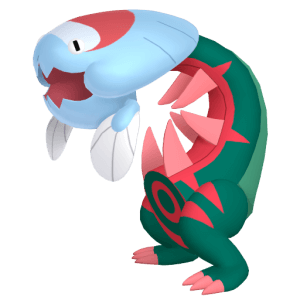







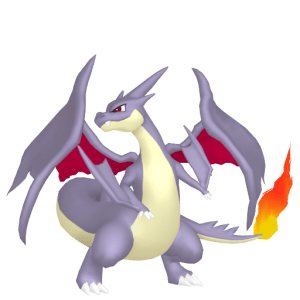
Rhyperior is also based on the real life rock called Rhyolite which coincidentally ends with ite like the mega stones. This type of rock can be found near volcanic areas.
Watch them place Rhyperiorite on Mt. Chimney
Its ironic we said the same with Diancie and look where it is
*twerks*
http://nevadatrivia.com/wp-content/uploads/2011/01/Rhyolite.jpg
spooky
A trash location for a trash pokemon.
Duhh everyone know that
(looks around) Yea heavy everyone knows that even I did hehe (What did I know? I don’t even know)
http://i.imgur.com/gF1lJEe.gif
us when we get our oras pre-orders in the mail
I’m the girl
She wants to f*** cause I have a diancie…
http://oi62.tinypic.com/f2377b.jpg
Kill her
I went to get my hurr-did like Shady’s old emo hair… and she wants to come on me. Bye bish not my type!
Tinypic refuses to load for me ;~;
aw yeah!!! get it in!!!!
You have a diancie, I have a hoopa.
me and heavy have both
not really. I lied…
*sips tea* we still have dance and hoopa
I have a shiny flygon.
i used too ;~:
Never ever
e
v
e
r
e
v
e
r
WE HAVE DANCE!
DANCE THE NIGHT AWAY BABY!
*sips*!!!
*sips tea* A trainer never leaves a code unused
And here I am, still don’t even have a diancie 😛
Here I am, once again
Gold diggers everywhere.
She wants the D….iancie
Who here has ALL the Mega stones up tothis put in Pokemon X AND Y
me
i haven’t finished Y
All except lati@site and Y exclusives
I do… including latiasite and latiosite lol.
I havent gotten any of the post-game ones, and rarely any from the actual storyline 😛 (I think i only have the mega stones for blastoise, venasaur, ampharos, and gengar :P)
I forgot that I needed manectrics and Pinsirs b4 I reset one of my games to play thru again…….I might have to just play thru with over powered mon’s to go back and get them……
i have them all except diancite i think
Do we have to trade every single mega stone from XY to ORAS?.. Such a hassle T.T
Yeah unfortunately, unless they have those Mega Stones in ORAS too; which I’m hoping for
They better update the Pokebank to allow transfer of Mega Stones .-.
They’ll probably have us use Pokemon Link to send certain items over
Anything’s better than trading them individually haha
That would be so much easier lol
What the fuck is she doing with her hands
http://i.4cdn.org/vp/1415551301699.gif
I dont know but its oddly sexy
Whatever she wants. She’s Serena.
The same s*** taylor swift does at every award show
Making hand gestures to attract the wild Chico
Watch as my two favorite oras megas (Lopunnite and Rayquazite) Become version exclusives to the game I dont have
definitely not rayquazaite cause its found in both
Lopunnite not sure
I REALLY REALLY hope we get the galladite after we beat wally in victory road THE FIRWT TIME not post game
Maybe he gives it to you, like how Serena/Calem gives you the Absolite.
nah but serena/calem gave it post game i want it before post game ;~;
True. He’ll provably give it to you post game so the orignal play through is closer to the originals. Like with Diantha and Ralts post game unfortunately.
If not i wil hunt on twitch and stuff for people to give it to me since i know that at least one person will beat it at midnight and clone ti with power save
*beats the game…*
*see’s wally standing in verdanturf town reading the town description*
*presses A*
*I think I’m gonna go off to a faraway region.. I entrust you with this Ralts*
*hands us a level 5 male ralts with all 20 ivs holding galladite
Inb4 we find Wally in that “Faraway” region in Z
*beats game*
“sees Mom say that professor Birch wants to see you in his lab.”
*walks into lab and see birch with three pokemon beside him”
“Congrats on beating the league. As a reward, Please take one of these rare pokemon I found along my research. They will be really helpful in your next journey”
” Inside the balls are Johto starters”
*chooses Cyndaquil*
it holds the Typholosite
This would b nice lol
FRICK YES PLEASE!
12 more days.
until groudon is awakened by magma and kills everyone (especially aqua members)
12 more days until kyogre literally splashes groudon with a water molocule and groudon dies in a fit of rage and crying.
Oh, and kyogre was sent out last :^)
Protect
Switch
protect
switch back
lol
Implying kyogre can’t do that 🙂
IMPLYING KYOGRE CAN’T LEARN BLOCK
Why would you waste a move slot on block?
To deal with scum who try to escape 🙂
protect blocks out block
Then that’s basically just a wasted turn
At least our theme isn’t a high screeching drought theme 😉
At lease we arn’t abusing shamoo
Primal shamoo will eat your godzilla
Primal Red Godziilla Thing will step on primal shamoo
You’ll just fall into the water.
Red Godzilla Thing comes with floaties >:D
For real though, are Maxie and Archie both color blind or something?
Neither of them thought “Hm if Kyogre/Groudon is Blue/Red, maybe the Blue/Red orb would awaken it and lot the opposite?”
http://cdn.bulbagarden.net/upload/thumb/4/41/382Kyogre.png/250px-382Kyogre.png
THE LINES
Groudon had black lines XD
I see blue
http://www.rfgeneration.com/images/games/U-074/ss/ts/U-074-S-03740-A.jpg
in the title screen yeah but I mean in its real design
Groudon a literal shit
In a recent trailer it showed them holding the correct orbs, so the story is probably updated.
good, it made no sense in emerald
Wait where do they show them with the orbs?
When they showed Kyogre/Groudon’s awakening cut scene. They hold the orbs.
ah ok
It’s in the cut-scene when Maxie and Archie are holding the Orbs. Take a look at the screenshot. (Refresh.)
The opposite coloured Orb will awaken them. The correct coloured Orb will allow them to control them. That’s how it works. Either team didn’t get both of the Orbs.
ooooh, still makes no sense if they want to controll it to expand the land/sea
yet in the anime team aqua stole both legends kek
I’m not talking about the anime at all. lul. I know. That’s how Team Aqua got to control both of them; I believe!
I wonder if the magma hideout is by lilycove or they kept it in MT chimney
Probably mount chimney.
Depends if ORAS takes elements from Emerald other than the Battle Frontier, i guess
I really want it to be in Mt. Chimney
according to Game freak they improved the story a lot so idk
Why must ORAS come out a week before my exams? :'(
I wanna know why ORAS has to come out two weeks ahead of now
Like three weeks for us xD Thanks GF.
My 8 year old littlebrother has better handwriting then I do
;~:
A monkey has better hand writing than I do
my little brother, monkey, same thing
Wooper (were it to actually be real) would have better handwriting than me.
I’m just going to ask that we keep down the profanity a little bit as well as trolling other people about having fake CoroCoro leaks. It’s unnecessary spam that we can all do without.
Be patient, CoroCoro is right around the corner.
I’m not Chico, but I have corocoro leaks :3
I honestly don’t see the problem with profanity. But yeah fake corocoro scans aren’t funny any more
We can do without profanity. And I’m also referring to Heavy’s frequent sexual jokes and whatnot. Those are inappropriate for a Pokemon website.
Can we if we make the sex jokes more subtle?
Like people won’t even know they’re sex jokes?
Just don’t talk about giving people BJs and stuff like that. It’s just not necessary.
mmk we won’t
Okay. I’ll be checking the site throughout the day and if I continue witnessing things like this, I’ll have to start deleting comments and issuing bans. Keep everything Pokemon-only and OR/AS related, please.
I make a lot of sex jokes! When a PokeGurl is hawt. We all got to know! ;]
Idk but it feels like the team aqua plot line makes more sense than the team magma plot. I mean team MAGMA having a submarine and going to the OCEANIC museum
if anything it makes more sense for aqua fighting at mt chimney cause its like they are trying to stunt Team Magma’s progress
Well what makes more sense,
expanding the oceon causing people and pokemon to drown
or expanding the land, making more room for people and pokemon.
Also, water pokemon can survive on land soooo…
we can create water cities like sootopoolis city and etc. Plus Archie is trying to preserve nature while Maxie only cares of technology
I think Maxie’s goal is more what people would do in real life.
yep. aka BORING
Exactly xD That’s why I’m playing AS.
Same
that and it was my first game and always play the blue game first XD
Im only gonna play OR for primal groudon and etc
Maybe I’ll buy OR way later when I have more money and to see story changes. The exclusive legends too.
Yeah, I want to go against that Idea, not go against the idea of human’s development lol
This is why I love Maxie.
I guess now he has one of most realistic goals in Pokémon.
But think of all those pokemon! All the adorable teddiursas, furrets, fire types, they will all DIE because of aqua’s selfishness
they can adapt too. Your magma is killing all of the water pokemon when they need water to survive
Need water to survive? I turn to example pokemon platinum, where galactic bombs the lake, there is no water but the magikarp are still living
MAGIKARP
ONE OF THE WEAKEST POKEMON
If they both cared about nature. They wouldn’t want one force (land and sea) to be larger than the other.
The reason I love team aqua is because they’re like extreme eco-terrorists.
I’m waiting for the day when there’s teams based on the State of Nature (i.e, humans are inherently good vs. humans are inherently bad)
imagine science vs religion
Initiate the God Pokemon vs a Genetically engineered one
Oh wait
I like that idea a lot. But maybe they’d disguise that idea so people don’t get offended.
agreed
Team Aqua is my favorite team!
Love basically everything about them.
Especially now with their updated plot <3
Its my second favorite with team plasma at the top
Shelly more than most parts, i’d assume :3
why did they make her so perfect?
Though I’m magma, I love galactic. Its freaking threatening! This guy wants to make a new world, by DESTROYING OURS! THATS FREAKING INSANE and i love et
Shelly’s bod tho. I’m getting OR; but that might change my decision. I do luv Courtney tho!
This is why Emerald > RS.
Emeralds story was more refined and made more sense.
Magma had the Mt. Chimney and Mosdeep Space Station bit
Aqua covered the Oceanic Museum, Submarine and Lilycove hideout.
Good points here!!! #TeamSapphire
I gotta say though… Maxie looks pretty bad ass this time around and made me second guess what game I should be getting… I love his focused look and how he walks around with his hands behind his back
Exactly this. Maxie is the essence of badass
he is like a mixture of colress and cyrus. i love maxie but archie took the cake for me
Maxie is casual and formative. Archie is just funny. I mean even in the CoroCoro his team was in scrambles. Also, if you battled Team Aqua in the demo; his team’s script was super funny!
Team magma fans can’t even see that midriff.
I like Magma more than Aqua but I can’t deny how funny Archie’s team is! They gave them a good personality! Same as Magma being more technological!
Archie is badass: The character
in the anime.
And in the games.
At Mt. Chimney. If Team Aqua is the evil team they want to create a lake. If Team Magma was the evil team they wanted to cause a eruption! Also, Team Magma went to the Seafloor Cavern to awaken Groudon in R/S. That’s why they stole the submarine.
I do hate how they made tabitha fat.
He already had a laughable name
He’s basically the kid that got bullied.
People trying to argue that something in pokemon ‘makes sense’
Smh
its a relative kind of sense
http://files.enjin.com.s3.amazonaws.com/616292/modules/forum/attachments/team+magma+we+want+you_1394588185.gif
Shaymin: Explained With Science (Such a beautiful read)
Shaymin are a species of forest-dwelling hedgehog-like creatures known as tenrecs. It is distinguished by a notable symbiotic relationship with the flora of its woodland home. The skin of the animal’s back is grooved with many indentations. As Shaymin burrows and wallows, these indentations begin to fill with rich soil which stays firmly embedded within its dorsal region. Seeds and pollen begin to get deposited in these grooves where they take root and grow. Thus, Shaymin becomes a walking garden of sorts, transporting mosses, herbs and flowers from place to place helping them to further spread their range. In return, the verdant mass on Shaymin’s back allows it easily hide in the lush forest undergrowth.
While many different plant species have been documented hitching a ride of Shaymin, perhaps the most interesting relationship comes from a rare member of the orchid family (Orcis gracidea). The pollen of this flower is interfaced with molecules very similar in structure to mammalian neurotransmitters. Once the pollen has entered the respiratory system of the Shaymin, these compounds are encompassed into the mucus and enter the bloodstream via nasal capillaries. In high enough concentrations, these molecules block the function of the animal’s normal neurochemistry and begin to hijack the animal’s developmental and behavioral processes. The first change to occur are an overexpression of the animal’s Hox genes. This results in resources being rer-outed primarily to restructure the animal’s limb plan. The limbs are increased in length, strength and flexibility. The neck is also extended in length allowing more growth area for new flowers and other plants. Lastly, the animal’s ears are increased in both length and width and have the correct curvature to form a weak aerofoil.
Once the bodily transformation is completed, the pollen chemicals work to modify Shaymin’s behavior. Shaymin begins to be drawn to bright sources of light and thus is compelled to expose itself to the sun. As such, it uses its increased aerial maneuverability to scale tall trees and glide through the canopy. In doing so, it exposes to the plant to increased photosynthesis rates and allows pollen to be spread over wider areas. As such, regions bordering areas where Shaymin are found tend to become home to plant life that normally would not grow there. Shaymin is thus spoke of in legends as a harbinger of springtime, protector of nature and in some cultures, even a patron spirit of flowers.
You already know I not reading any of that. It’s a hedgehog with a grass and flowers growing on its back. Done!
It’s a scientific explanation as if they were real animals. Found a bunch of them and I’m crying. I want them compiled in a book.
Celebi being only able to live for 2 weeks made me cry and want one
I love those things. We should make a book of it.
no not celebi D:
What about jirachi?
I requested jirachi the guy didn’t make one yet =(
I love shaymin <3
Theory Time!
*game thory intro plays dododododododduhduhduhduhduhdodododuhdododododo*
What if the reason evil teams are defeated because you beat their pokemon is because of a link they have with their pokemon? In pokemon conquest ( I know its not cannon but stay with me) each warlord forms a bond with a pokemon as soon as they get it. When the pokemon feels something, its warlord feels it too. So the feeling of pain, will be felt in the trainer. Example: In pokemon Platinum, Cyrus has no emotion. How ever, his golbat must evolve by happiness. Every time you fight him, it doesn’t stop him from moving towards his goal, until he gains that emotion. In the final battle in the distortion world, His golbat evolves, by friendship. Cyrus starts to feel emotion. So when his pokemon are defeated this time, he feels his pokemon’s pain. Unable to stop you from battling Giratina.
Whata you think?
I never liked Cyrus. His battle music was so unfitting, and his plot was terrible.
I like the character, though.
i lvdd his battle theme
I didn’t say it was bad it was just unfitting ;~;
How? He was a psycho who wanted another universe. It fit perfectly. Had the pumped and spacy feel!
http://www.youtube.com/watch?v=q6z_1cCvVjA
this would’ve been x11100000000 times better for cyrus
His plot wasn’t bad. He wanted a new universe to control. He figured out it would be a bad idea later on. Also, his theme was epic. (Not as epic as Team Magma/Aqua tho.) Wait for D/P remakes mate!
His ideas and his character was good, but the way the plot was executed was pure ass.
“I never liked Cyrus.
I like the character, though.”
You know nothing of the theater world!
Cyrus was life. His theme? Amazing. Plot? Good, could be better. And he’s one of the few Pokemon characters to die/get trapped in a different dimension (ambiguous in the anime)
OR
He does care his pokemon, but nothing else.
Eh. Maybe this might be right. I just guessed they realized what they did wrong. That’s what a lot of them did. Mostly, Archie and Maxie as an example. Another thing is that they might simply get tired of it. It happened to Ghetsis to the point he went crazy! Also, is Pokemon Conquest really not canon?
Apparently because mewtwo is in the game 🙁
This one is a real tear-jerker. You’ll cry at the end:
Celebi (Metrioptera chronambulus)
Celebi are incredibly rare insects of the katydid family whose unique lifecycle and association with nature have given it a legendary status among folklorists dwelling near lush temperate forests. Celebi lay only a single egg during their reproductive cycle and this egg is deposited deep into the forest undergrowth, hidden from both predators and the elements. The egg lays dormant in the leaf litter for periods spanning more than 60 years. Entire human generations come and go before Celebi are seen again in the wild. It is this rarity in combination with the long time periods at which Celebi are absent from the environment that give rise to the legend that these insects travel through time; vanishing in one era and reappearing in another at will.
These bizarre eggs are also the explanation of another of the legends surround Celebi; their reputation as a harbinger of natural abundance. Unlike other members of its family, the eggs of Celebi are coated in twisted strands of a fibrous protein, similar in structure to silk produced by caterpillars to form their cocoons. These twisted fibers latch hold to grains of pollen, fern spores and other microscopic plant matter. Unable to plant themselves in the soil, the bound pollen and spores lay dormant with the egg until it hatches. Inside the cavity of the egg are not just nutrients that the developing nymph uses, but enzymes which help to boost the production of auxins and gibberellins, important growth hormones in plants. When the infant cricket begins to hatch, the captured pollen grains are coated in the enzyme and are explosively launched into the surrounding air. Eventually, the released spores take root and with their increase enzyme supply flourish at astonishing rates.
Years in which Celebi hatch from their long-ago laid eggs are said to have incredibly dense foliage cover. This cover symbiotically replenishes plants in the forest and gives the young Celebi places to hideaway and lush vegetation to feed on. The Celebi, once hatched, only lives for about two weeks. It undergoes a voracious feeding frenzy on the forest greenery, finds a mate and then lays yet another single again to begin the long, process anew.
I wanna do a pokemon sciencey thingy
Riolu
Riolu is a cool pokemon. They eat dunsparce and burn the left overs. Science science science stuff. The live forever
The best one I read hands down is the Manaphy one. I legit got goosebumps. Zygarde’s is pretty cool as well.
Yveltal’s science thing is hands down nasty and makes him even scarier than the movie portrayed it to be. Sylveon’s made it seem like it was weak =(
where are you finding these? I’m curious about yveltal
Yveltal (Kalosraptor miasma)
Yveltal is a large maniraptoran dinosaur that shares a common ancestor with Dromeosaurus and Deinonychus. Unlike its ground-bound bretheren, it has evolved to take full advantage of its feathery plumage and analogous to modern birds, has taken flight. The brilliant red feathers seen on this animal may have originally been used as flashy ways to attract a mate or slight variations within them could have been ways to identify individual members of a population. As the feathers grew in size and density, early Yveltal may have begun gliding from tree branches or from the ground. The leg bones of the maniraptorans were built for speedy running, so it is plausible that Yveltal’s ancestors could make short flights by running with its feathered arms outstretched, gaining lift much like an airplane.
Unlike other scavenging birds, Yveltal lacks a bald head to prevent diseased tissue from being lodged in the feathers near the eyes and nostrils. On the contrary, Yveltal seems to encourage the growth of these bacteria and viruses on its own body. The few Yveltal eggs that have been found have been analyzed in the lab. It seems that the ovalbumin surrounding the yolk is full of weakened diseases passed down from the mother. It seems the presence of these diseases works in a manner similar to vaccination, allowing the developing animal’s malleable immune system to get an early start at combating illness. As a result, Yveltal is a living carrier of disease — it is full of viruses and microbes which have no effect on it. In return, these microbes help eat metabolic waste and help to break down Yveltal’s rancid meals.
These diseases also benefit in that Yveltal helps them to be spread to other hosts. Yveltal secretes a salty, sugary solution from its skin which microbes are able to gain nutrients from. As it flaps its wings, microscopic droplets of this fluid are released into the air. Housed within a safe, droplet, the diseases can be spread in an airborne fashion allowing the microbes to remain healthy until they arrive at a new host. As such, peoples familiar with Yveltal often believed it was a bringer of pestilence and that its appearance was an omen of death and the end times. Modern research has found that the droplets emitted by Zygarde disrupt the surface tension of those created by Yveltal, resulting in the microbes losing their protective coating. Medicinal research is looking into a way to use Zygarde secretions as an antibiotic and antiviral panacea.
If an Yveltal dies, the immune response is suppressed and the microbial populations within begin to digest and fester the animal from inside-out. These releases mass amounts of methane pockets which build internal pressure causing the corpse to explode in a disgusting, fetid blast helping the bacteria to spread further. Early peoples believed that this was the manifestation of evil spreading outward from the corpse to consume the rest of the world.
0.o
wow
Basically alludes to Oblivion Wing as a suicide blast of bacteria… wtf… that ending paragraph killed me. And I love how it alludes to zygarde reversing the effects of it
Giratina and Yveltal team up to destroy the world
gg
Giratina’s theme slowed down is spooki
https://www.youtube.com/watch?v=gjNwJAxJD70
put at .5 speed lel
I just did. I think I just heard satan’s theme song
In the next series of the anime, we need a supporting character that actually sees through Team Rocket’s terrible disguises.
They should also argue with Ash every time Ash doesn’t think that it’s just Team Rocket wearing disguises.